
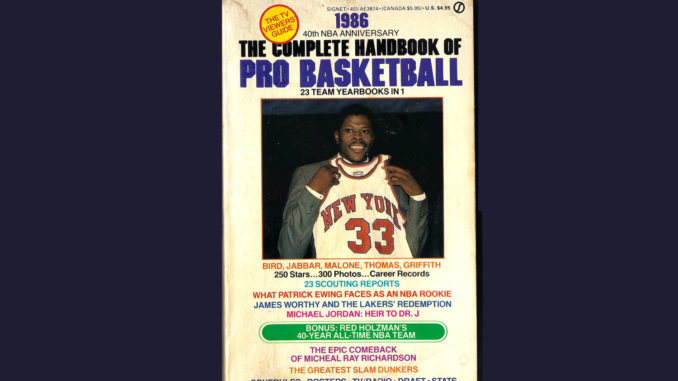
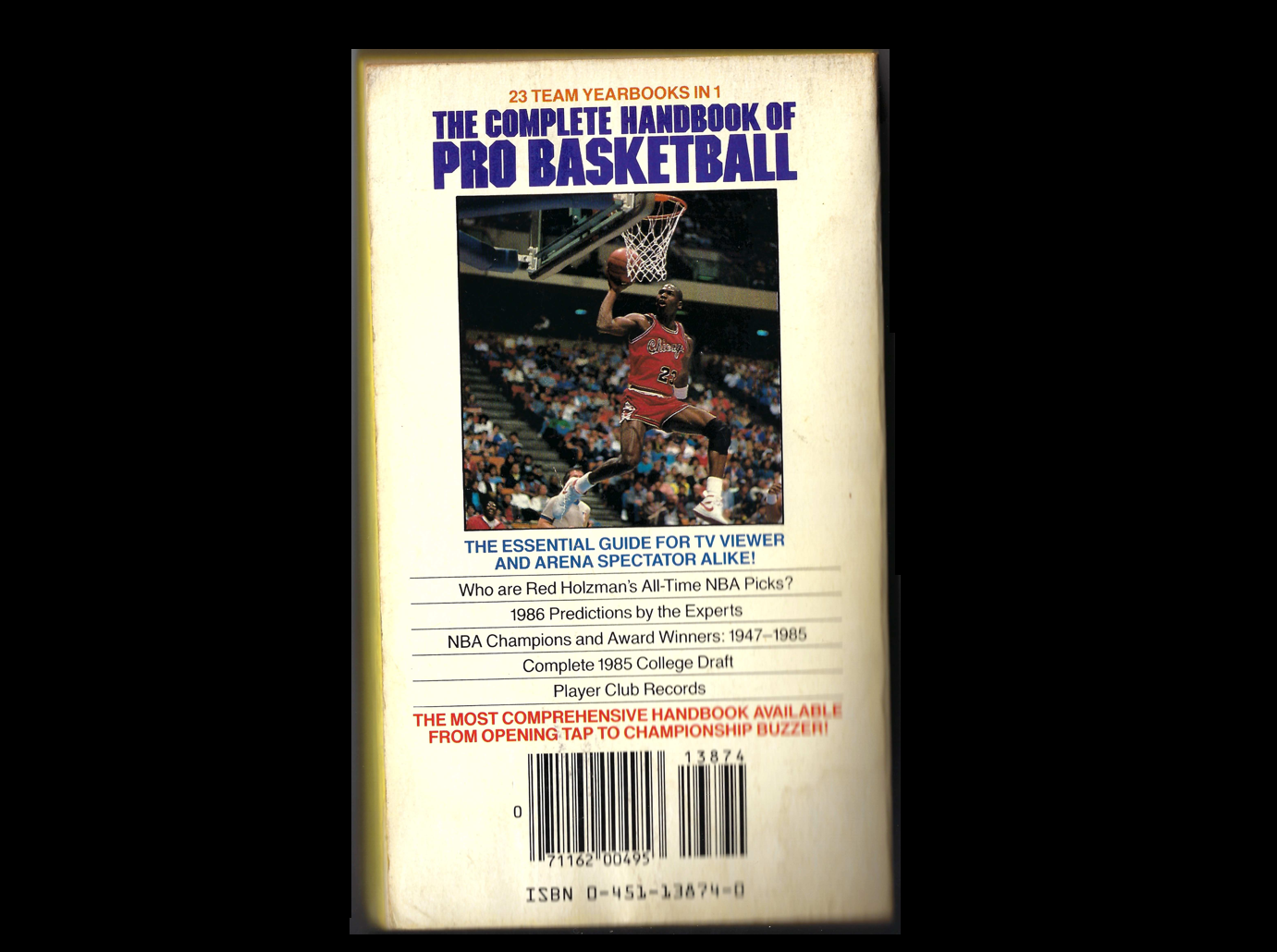
Back in the days before the internet, I cannot tell you how thrilling it was to approach October, the start of the new NBA season, when the new Zander Hollander Complete Handbook of Pro Basketball would come out.
You’d keep checking in the Sports section of the bookstore — which for me was a Barnes & Nobles in Manhattan on 6th Avenue and 8th Street — to see if it had arrived.
And then there it would be — a quick purchase and could not wait to start reading it on the subway home to Brooklyn.
Zander Was On Point & Funny
It was more than a treat — the unique feature was the funny and accurate bios of each player that Hollander provided, which were part scouting report, part standup comedy, but always razor sharp and on the money. Zander pushed the envelope. This type of writing, on sports players, was not available anywhere.
Zander also provided statistics for each player, a scouting report on players just drafted, and predictions — a complete handbook.
Analysis of Zander’s Analysis
I’m providing here a sampling of the 1986 Handbook. I’m presenting the pages for the Knicks team — under Fair Use doctrine of Copyright law, and with perfect hindsight, will analyze Zander’s analysis. The book details the 1984-85 season, with the 1985-86 season about to begin.
The 1984-85 Knicks
The 1984-85 Knicks had a tremendous fall from grace due to their entire front line being wiped out by injury.
The team that had won 47 games and beaten Isiah Thomas and Detroit the year before in a tough 1st round series (3 games to 2) and then lost in 7 games to eventual champion Boston and Larry Bird — was wrecked by injuries that took Bill Cartwright (two foot surgeries), Marvin Webster (hepatitis), and Len Truck Robinson (knee and hand injuries) out for the year.
And then the unthinkable happened midway through the season — Bernard King — who was leading the league in scoring, went up to defend a fast break drive on defense in a meaningless game against Kansas City on a weekday night, and ripped his ACL.
NY was left Pat Cummings with Eddie Wilkins and Ken Bannister up front — and there were games were even they were out.
The Knicks fell to a 24-58 record — but it was all good because that enabled them to win the lottery and gain the #1 pick in the 1985 draft and Patrick Ewing.
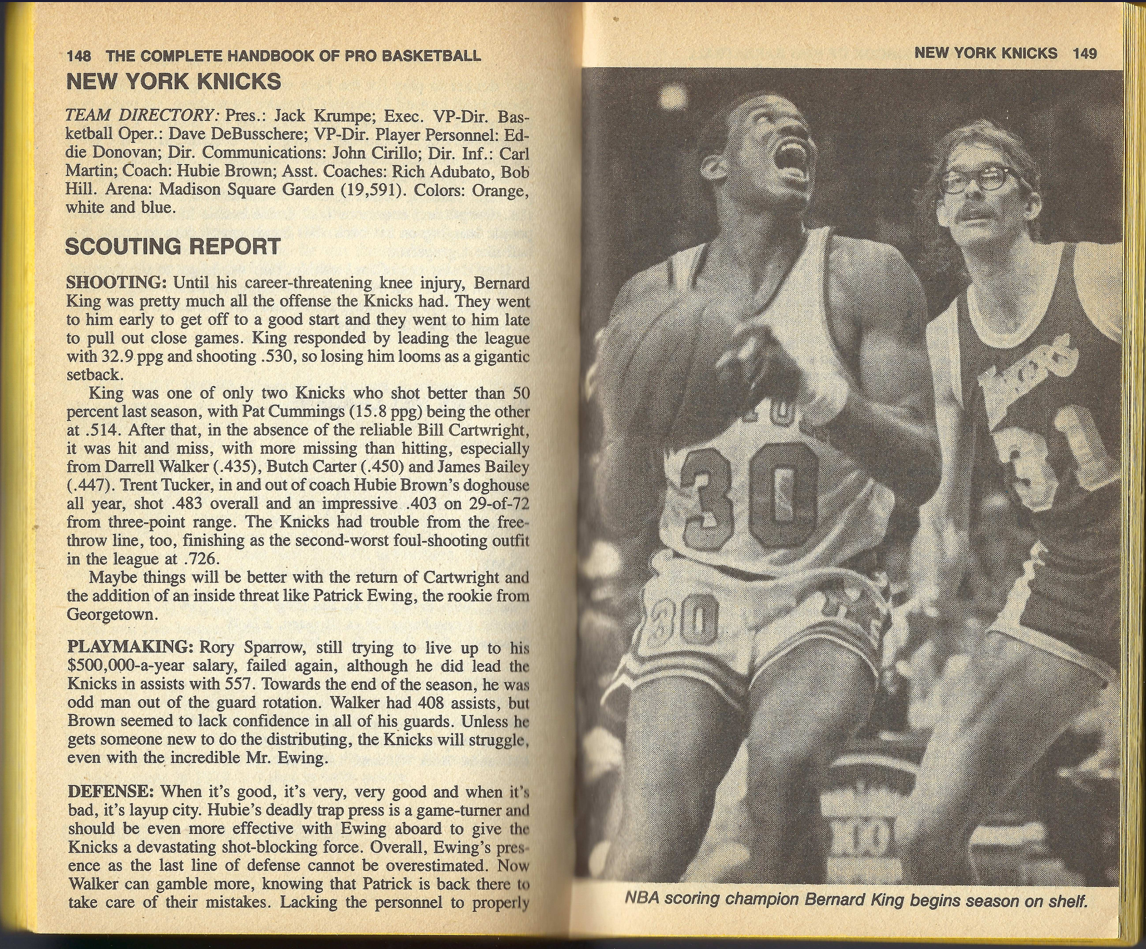
Zander’s outlook on the Knicks was overly optimistic: “Ewing makes them 100 percent better. That means the Knicks, 24-58 last year, should be a .500 club. Any improvement beyond that depends on Kings’s knee. if his injury is as bad as some reports indicate, he’ll miss most of the season.”
Zander got Ewing’s impact wrong — Patrick Ewing would do great as a rookie but still the Knicks in 1985-86 would go 23-55 — a game worse than 1984-85. Zander was right on Bernard King — he would work hard to come back but wouldn’t return until the end of the 1986-87 season, and then the Knicks would let him sign elsewhere (with Washington) as a free agent. He’d never again play for the Knicks. A mistake as he eventually regained form for a several seasons with the Wizards.
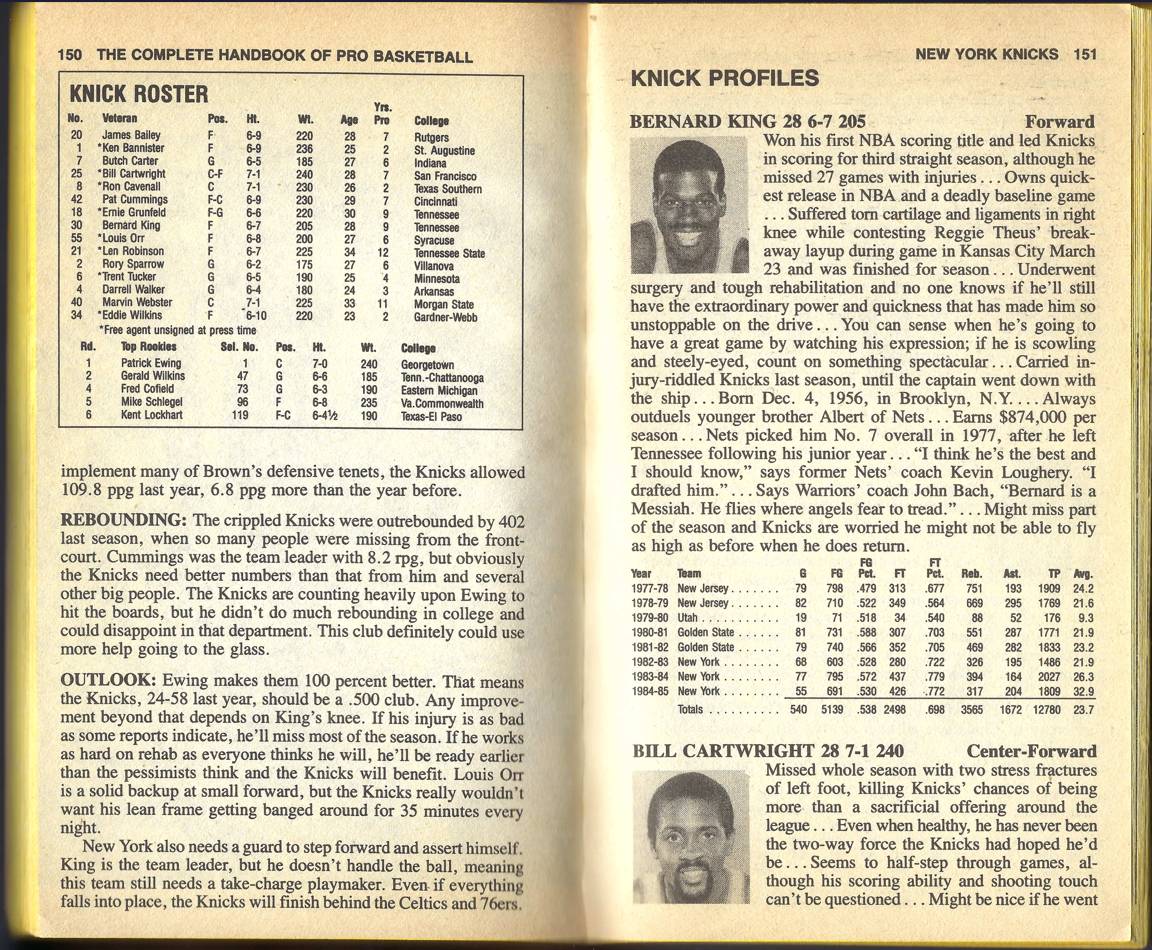
Bill Cartwright missed half of the 1984-85 season with a stress fracture of the fifth metatarsal (the bone connecting the little toe to the foot). The injury first occurred in the 1984 offseason, with a re-fracture occurring on November 10, 1984, at a Knicks practice in New Jersey. He underwent surgery in December 1984 to have a screw inserted to help the bone heal.
He would miss most of the upcoming 1985-86 season — playing just 2 games. Cartwright would eventually play half a season alongside Patrick Ewing in 1985-86, and a full year in 1986-87, before being traded to Chicago for Charles Oakley (a great trade).
By the time Zander wrote this book, Truck Robinson was GONE from NY. He never fit in — and as Zander pointed out in the 1985 handbook, was complaining about the amount of shots he got in Bernard King’s shadow, and took extra long coming back from injuries as an act of protest. In 1984-85, Truck Robinson was sidelined for the whole season with an injury to his left knee, and then his hand.
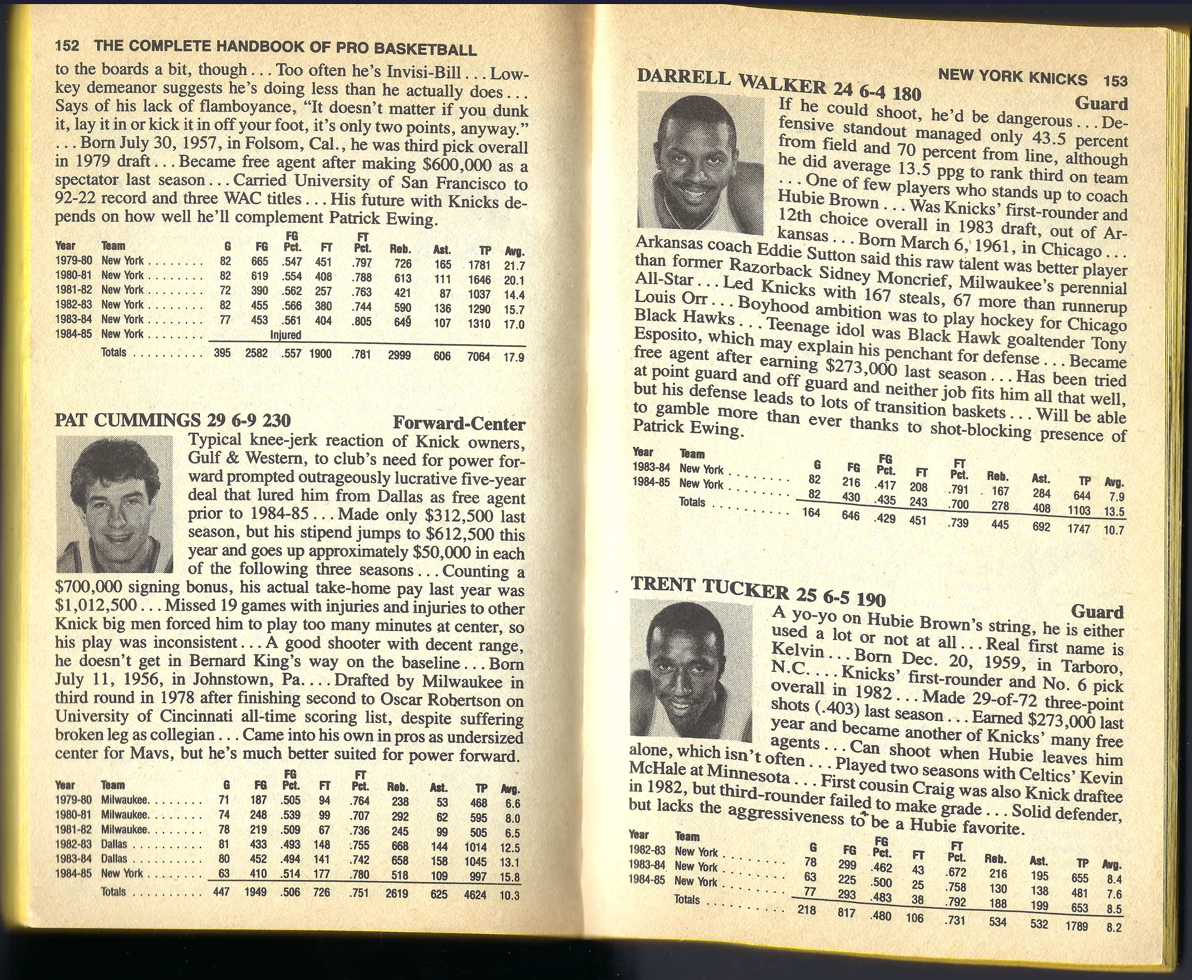
Pat Cummings had some decent moments for NY, but he was unathletic and undersized — and Zander points out “Typical knee-jerk reaction of Knick owners, Gulf & Western, to club’s need for power forward prompted outrageously lucrative five-year deal that lured (Cummings) from Dallas a s a free agent prior to 1984-85.”
Makes you realize how fortunate the Knicks have been to be owned by James Dolan — despite the many years of losing due to NY being punished by the Salary Cap.
At least Pat Cummings “doesn’t get in Bernard King’s way on the baseline.” Maybe that was the lure.
Zander on Darrel Walker: “If he could shoot, he’d be dangerous.” Walker would play one more year in NY, before going to Denver for a year, and then Washington for 4 years. He spent his career as a defensive guard off the bench, and is today the highly regarded head coach of Arkansas.
Easy to forget that Trent Tucker “was in and out of Hubie Brown’s doghouse” (in Scouting Report above) and was “a yo-yo on Hubie Brown’s string, he is either used a lot or not at all.” Zander nailed it when he wrote “Excellent defender who lacks the aggressiveness to be a Hubie favorite.”
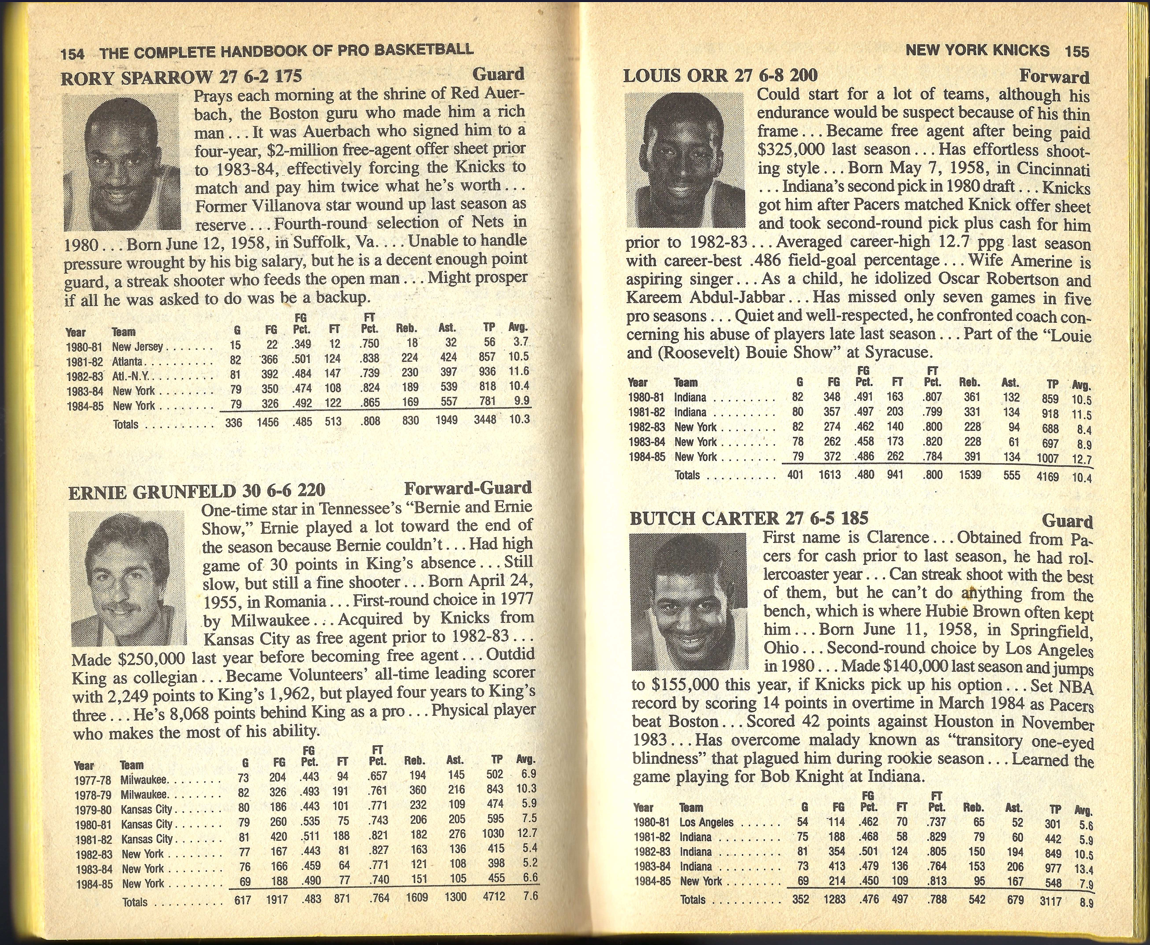
Zander on Rory Sparrow: “Prays each morning at the shrine of Red Auerbach, the Boston guru who made him a rich man.” Pure Zander.
Sparrow, Marvin Webster, and Sly Williams had been given huge contracts by Auerback in retaliation for the Knicks attempting to sign Kevin McHale in 1983; McHale used the Knicks to drive up his salary offer, then turned around and signed with Boston. Auerbach retaliated by offering the 3 Knicks large contracts, and the Knicks matched them all to keep their team in tact.
Zander was a little nicer to Ernie Grunfeld in this year’s handbook — vs the prior year. Grunfeld had a decent season off the bench, and Zander said he was a “Physical player who makes the most of his ability.” Maybe Zander had an inkling Grunfeld was on his way to becoming a GM someday.
Zander had nice words on Louis Orr (“Could start for a lot of teams”). On Butch Carter: “Can streak shoot with the best of them, but he can’t do much from the bench, which is where Hubie Brown often kept him.”
On Marvin Webster: “Confidants say he doesn’t want to play pro ball anymore, that the pressure to perform has gotten to him.” Interesting. Looks like Zander was on it — Webster missed the entire 1985-86 season with hepatitis as well, and then played just 15 games with Milwaukee in 1986-87 before retiring.
On April 4, 2009, Webster “was found dead in a hotel bathtub in Tulsa, Okla. He was 56. At his death, his agent W. Charles Bennett said Webster was “somewhat reclusive and was always ‘trying to find a place of serenity and peace.’ He remembered Webster as an avid reader who was deeply religious and enjoyed traveling.”
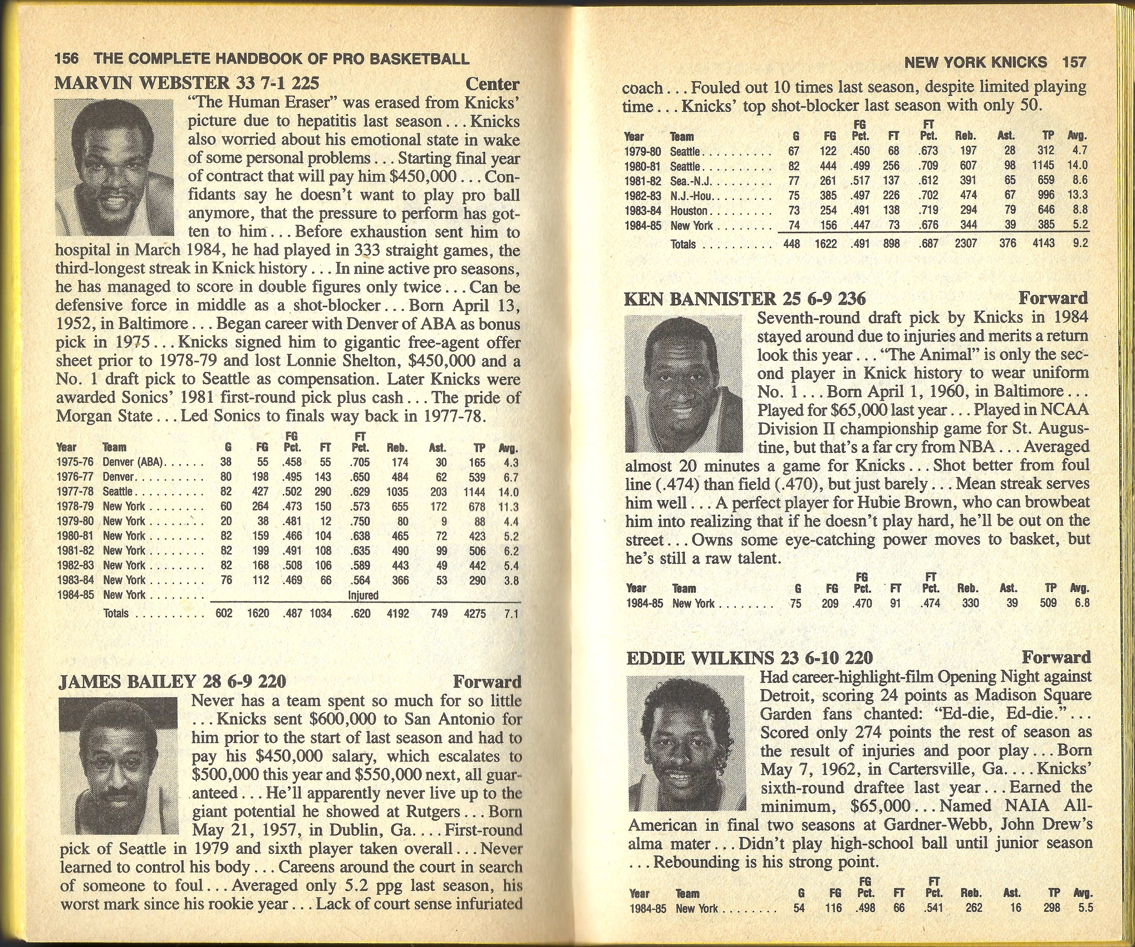
Zander on James Bailey: “Never has a team spent so much for so little. Careens around the court in search of someone to foul.” Zander had a way of putting things.
Ken Bannister and Eddie Wilkins were the two feel-good stories of 1984-85. On Kenny “The Animal” Bannister, Zander said: “A perfect player for Hubie Brown, who can browbeat him into realizing that if he doesn’t play hard, He’ll be out on the street.”
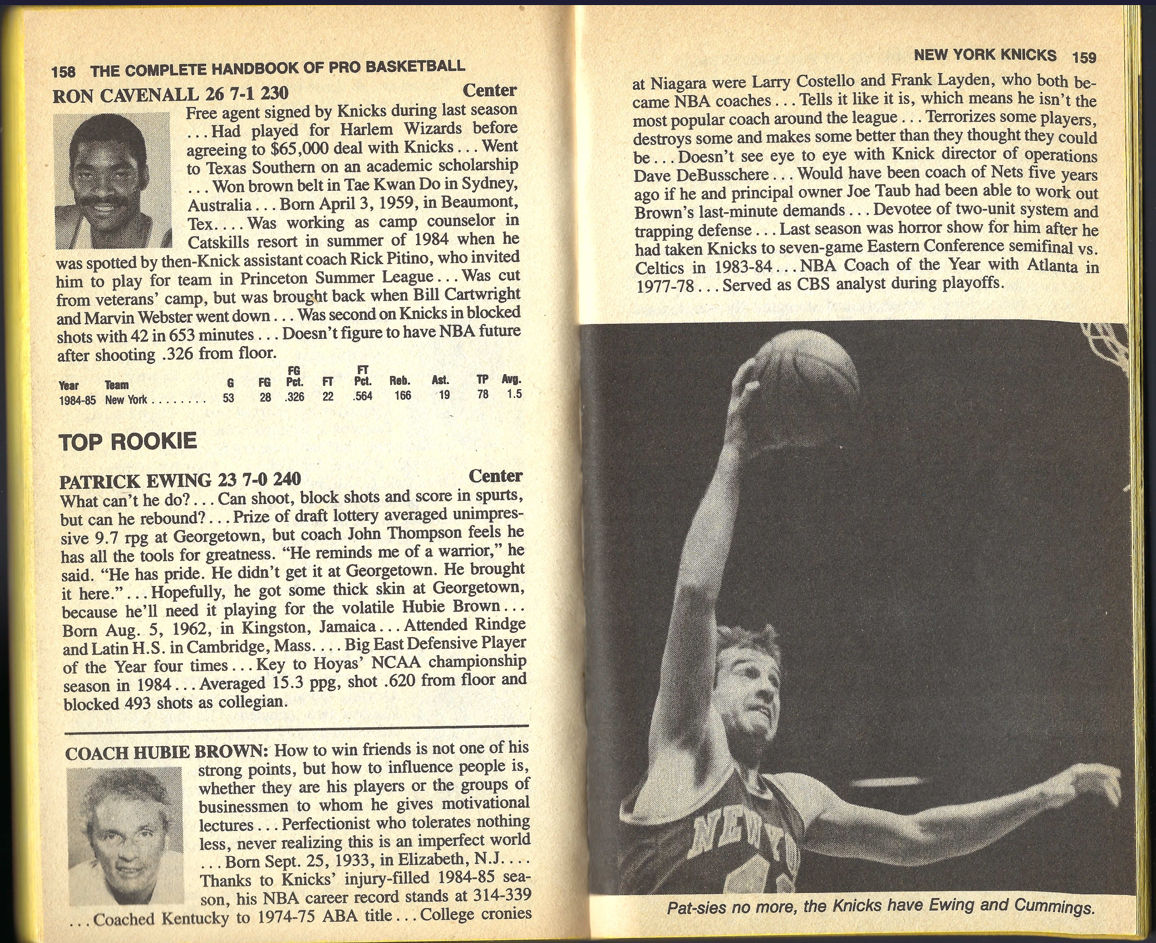
Zander informs us of the little things on each player as well — for example the fact that Ron Cavenall “won brown belt in Tai Kwan Do in Sydney, Australia” and also that “Was working as a camp counselor in Catskills resort in summer of 1984 when he was spotted by then-Knick assistant coach Rick Pitino.”
Zander was not sold on rookie-to-be Patrick Ewing’s rebounding — and Zander nailed it there too as Ewing’s rebounding was a tad disappointing his first 2 seasons. But Ewing worked on that skill and became one of the best rebounders of his era.
On Hubie Brown: “How to win friends is not one of his strong points, but how to influence people is, whether they are his players or the groups of businessmen to whom he gives motivational lectures.” Many NBA fans — who weren’t born when Zander wrote this — know full well how great an analyst Hubie Brown was for decades on national broadcasts before recently retiring just last year at age 91.
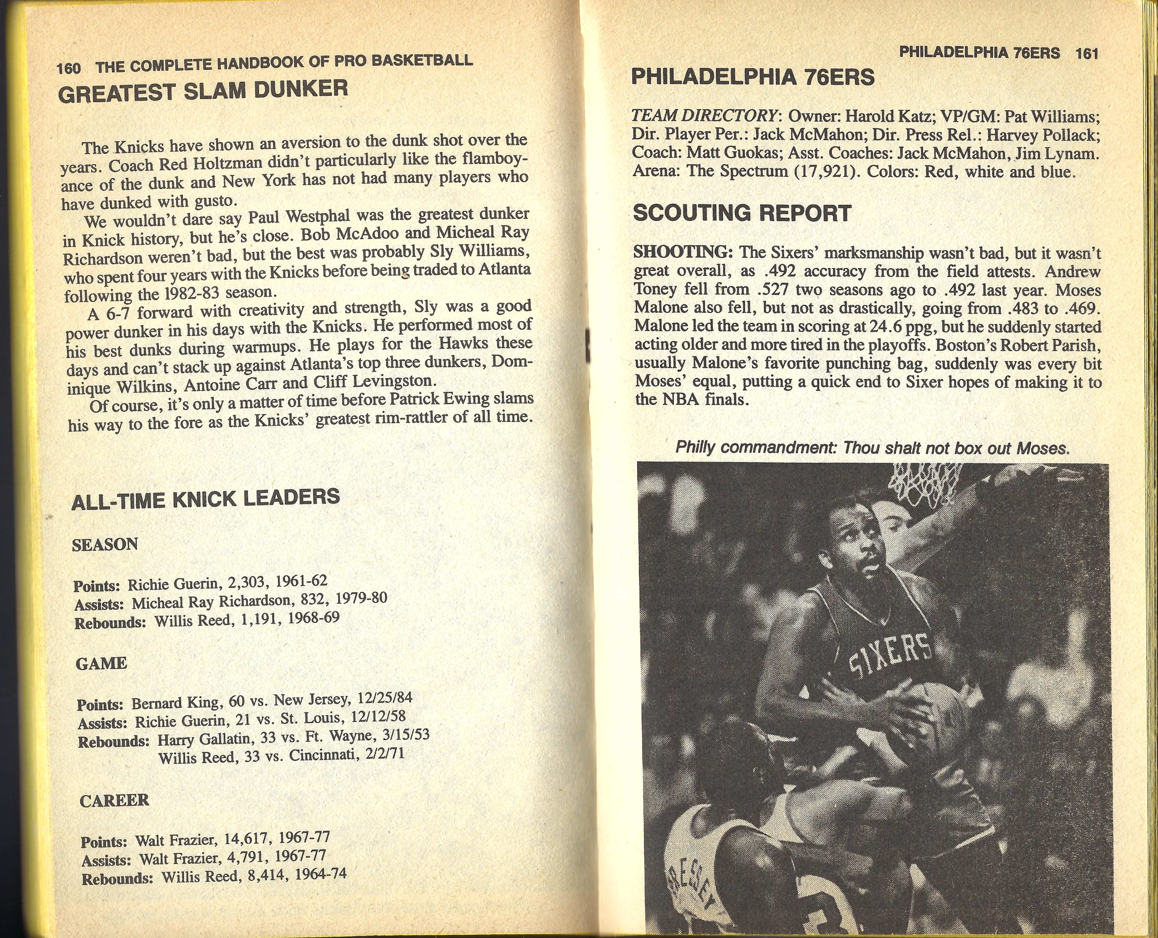
Zander on the greatest Knick dunker ever: “We wouldn’t dare say that Paul Westphal was the greatest dunker in Knick history, but he’s close.” This was before Kenny Walker won the slam dunk contest for NY in 1989, and then years later Nate Robinson won slam dunk titles in 2006, 2007, and 2010, and then Obi Toppin won a slam dunk title in 2022. Not to mention amazing Knick dunkers thru the years like John Starks, Patrick Ewing, Mitchell Robinson, Latrell Sprewell, Marcus Camby, Eddy Curry, etc. The Knicks have come a long way there.
Be the first to comment